


We are beginning the orderly wind-down of the original USDv and sUSDv system in preparation for the public launch of the new USDv.
The original system operated for 18 months without a loss event affecting the holder principal and distributed ~$60,000 in rewards. It was a successful closed beta that gave us the operating experience and infrastructure needed to build what comes next.
The legacy and new USDv are separate tokens with different programs and reserve models. There will be no automatic conversion. Holders will first exit the legacy system into USDC, then acquire the new USDv once it is available.
What the original USDv proved
The original system paired USDv, the liquid dollar, with sUSDv, the staked token through which users received rewards. Behind them, reserves were deployed into a delta-neutral basis strategy that held spot assets against offsetting short positions in perpetual futures markets.
The trade itself was straightforward. Operating it safely behind a live dollar was far more complex. It required legal and counterparty structures spanning custodians, trading venues, operators, and compliance providers. Through Ceffu’s off-exchange settlement infrastructure, assets could remain with the custodian while mirrored balances supported trading on the exchange.
We also built the basis engine from the ground up. It opened and rolled positions, maintained the hedge, enforced venue and concentration limits, monitored pricing and liquidity, and could halt activity through circuit breakers and kill switches. Custody balances, exchange collateral, hedge positions, token supply, staking liabilities, and reward distributions all had to remain reconciled. Capital movement was limited to approved paths, with administrative controls behind a multisig.
We capped the beta at $3 million to test that system with real capital while limiting its scope. It processed deposits and exits, maintained its hedge, and distributed rewards under live market conditions.
In hindsight, October 10, 2025 became a turning point. The engine remained operational through the largest 24-hour liquidation event in crypto history. In the weeks that followed, however, funding collapsed and remained weak. The strategy still worked, but the opportunity it captured was cyclical. Scaling would have required subsidizing rates and chasing TVL to preserve a headline yield.
At the same time, YaaS was showing that Solomon’s lasting value was not a particular source of yield. It was the infrastructure for administering policy-driven economics around a dollar. It also became clear that users were more comfortable treating USDv as money when its reserve risk looked closer to a conventional fully reserved stablecoin than to an actively managed trading strategy.
We therefore kept the beta constrained and focused on a more durable model.
YaaS allowed rewards to follow eligible USDv without requiring the token to be staked or removed from where it was being used. This required Solomon to understand more than wallet balances. When USDv entered a liquidity pool, its exposure became part of a position that changed as trades occurred, fees accrued, and liquidity was rebalanced. Our state-reconstruction system tracked that exposure and kept the reward attribution current.
ORO’s GOLD/USDv pool was the clearest live example. LPs could remain in the pool, continue earning trading fees, and receive additional economics on the USDv portion of the position without unwinding, wrapping, or staking it elsewhere. Across its deployments, YaaS-enabled liquidity processed more than $7 million in trading volume.
That infrastructure now sits beneath the new USDv. The new system uses one reserve-backed token designed to remain liquid and usable while Solomon handles state awareness, policy, attribution, routing, and reporting. There is no sUSDv or staking period. Rewards can follow eligible balances without requiring holders to move into a second asset.
The basis positions will be closed and the legacy programs deprecated, but the legal structures, custody integrations, capital controls, reconciliation systems, and operating experience developed through the beta carry forward. Solomon also retains the infrastructure required to support other separately structured and disclosed reserve profiles in the future.
The Wind Down Details.
Unstake sUSDv into legacy USDv.
The seven-day waiting period begins when the request is submitted. sUSDv holders should submit their request no later than the published deadline so that it completes before the legacy strategy closes.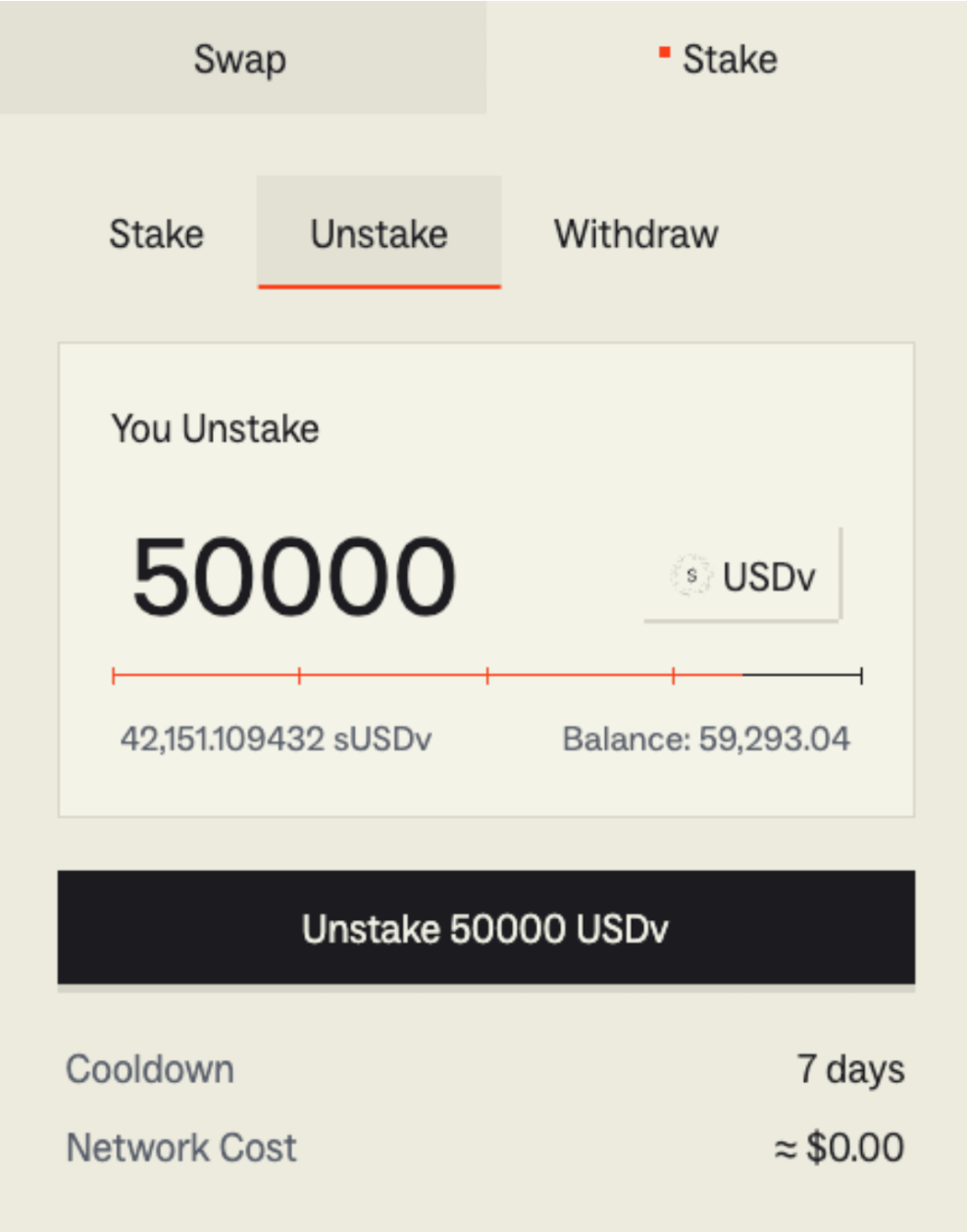
Swap legacy USDv into USDC.
Sufficient USDC liquidity exists within the USDv/USDC pool on Meteora. You can swap through the Solomon front end or through Jupiter.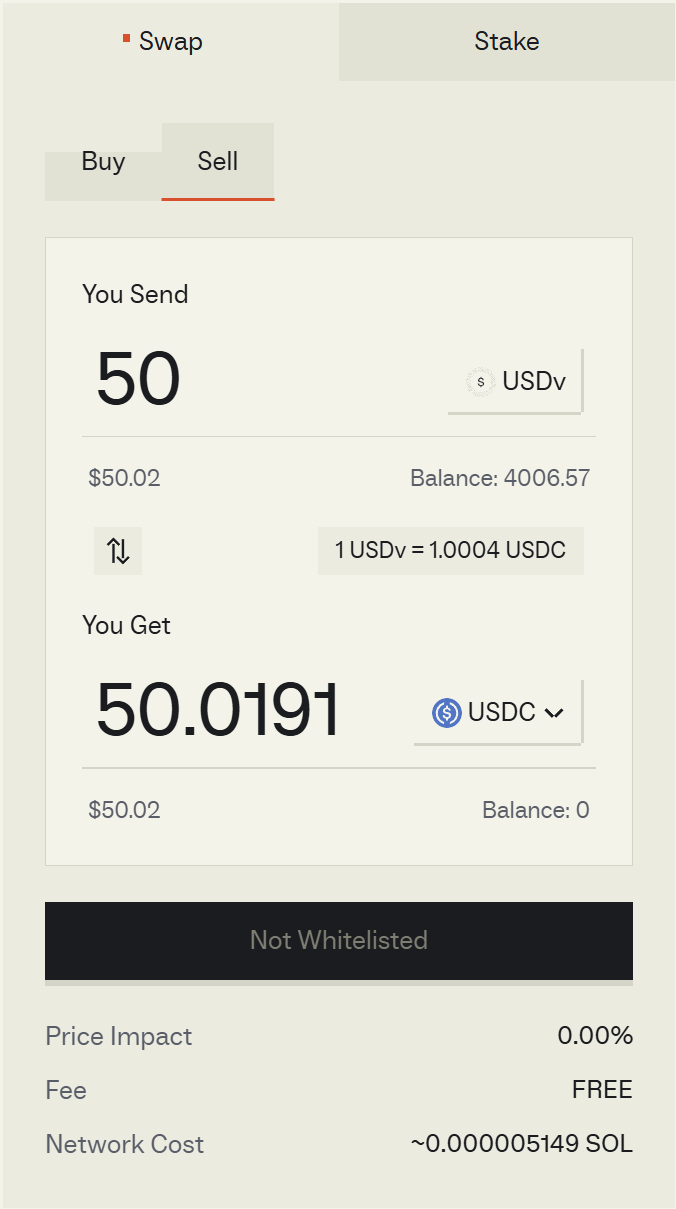
Acquire the new USDv.
Once the new USDv is live, users will be able to swap into USDv with any asset.
There is no migration transaction and no address to which holders should send legacy tokens. Because the two assets share a name, holders should verify the mint address rather than relying on the ticker. We will publish the official mint addresses, pool address, and front end links through Solomon’s official channels.
Wind-down timeline
Deadline to submit an sUSDv unstaking request: October 09, 2026
Legacy rewards end and final distribution occured: August 27, 2026
Legacy Solomon front end and support ends: October 16, 2026
The original USDv did what it was built to do. We intend to close it with the same care, while carrying the infrastructure and operating experience behind it into the new USDv.